How to Get Rid of Litter Box Smell: 8 Fixes That Work
Litter box smell is nearly always a routine problem, not a product problem. Eight fixes, in the order we would try them.
House Cat Living earns a commission when you buy through links on this page, at no extra cost to you. How that works
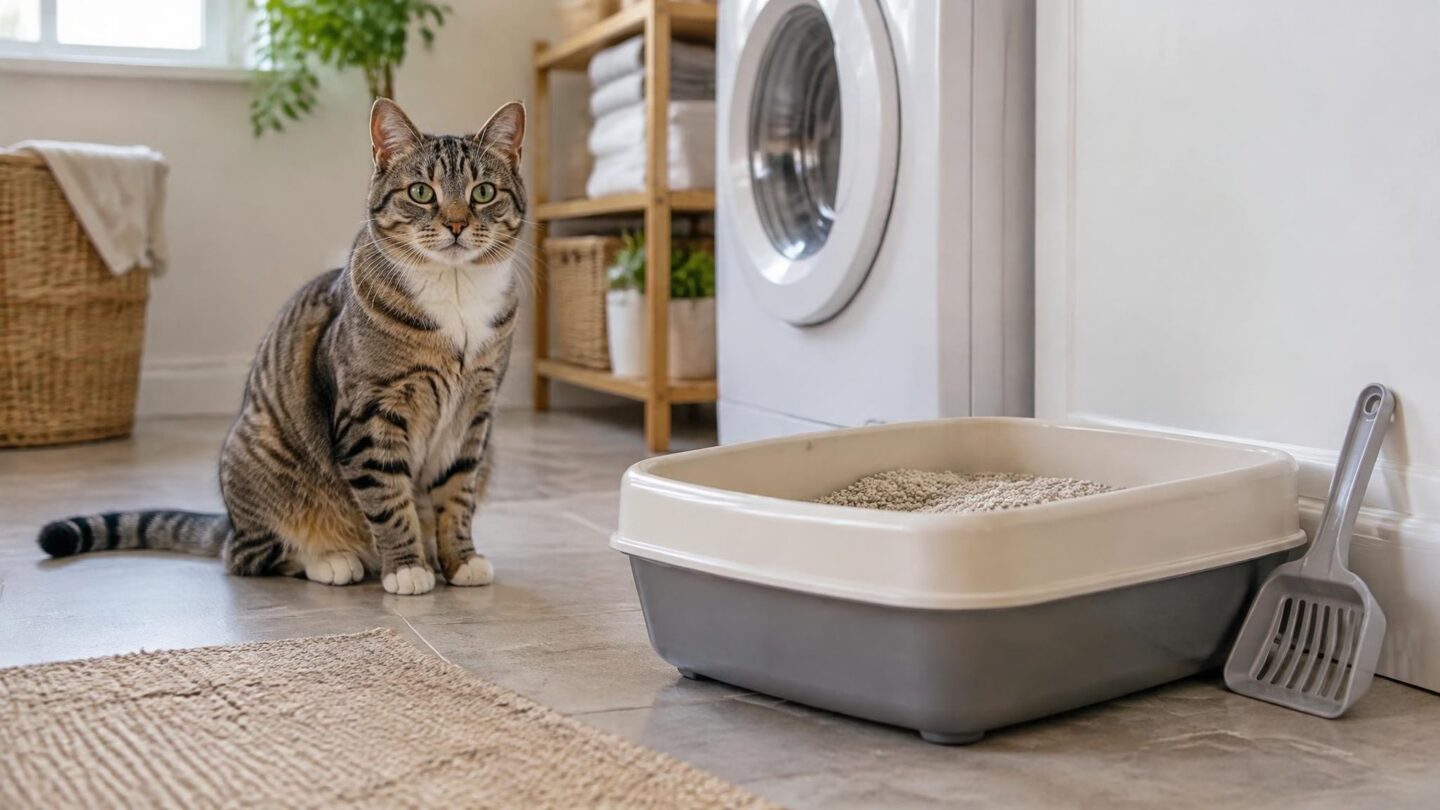
If you can smell the litter box from the next room, you are not a bad cat owner and you do not need a cupboard of sprays. Litter box smell comes mostly from urine. It contains ammonia and sulfur compounds, and the smell gets stronger as bacteria break the waste down. The longer waste sits, the worse it gets.
That makes this mostly a routine problem. Here is how to get rid of litter box smell, with the fixes in the order we would try them.
The short answer
Scoop at least once a day, keep clumping litter three to four inches deep, and replace all of it every two to four weeks, washing the box with mild soap. Add boxes until you have one per cat plus one, and move them somewhere with airflow. If the smell changes suddenly or your cat strains or goes outside the box, call your vet.
Why the box smells of ammonia
Urine is the main culprit, and specifically what happens to it in the litter. A litter that clumps fast seals the urine in so you can remove it. A litter that crumbles, or a box that is too shallow, lets urine spread and sit, and that is when the ammonia smell takes over.
8 fixes, in order
Scoop every day
Remove clumps and solid waste at least once a day. Twice a day is better, especially with more than one cat. Nothing else on this list works without this.
Fill the box deep enough
Most clumping litters work best at three to four inches deep. With too little litter, urine reaches the bottom of the box and sticks there.
Replace all the litter on a schedule
Even with daily scooping, replace clumping litter completely every two to four weeks, depending on the number of cats and the size of the box. Wash the box with mild soap and water each time. Avoid harsh chemicals and strong-smelling cleaners, because the residue can put your cat off the box.
Use a litter that clumps hard
Cheap clumping litter breaks apart when you scoop and leaves urine-soaked litter behind. A hard-clumping, low-dust, unscented litter such as Dr. Elsey’s Ultra Premium removes more of the source. In a busy multi-cat box, an odor-sealing formula with baking soda such as Arm & Hammer Clump & Seal is another option. We compare the types in our guide to litter for odor control.
Skip the heavy perfume
Scented litter often masks odor poorly, and strong fragrance can deter cats from using the box. If the litter smells strong when you open the bag, it is overwhelming to your cat.
Add boxes
The rule is one box per cat, plus one extra. More boxes means less waste concentrated in each one, and less smell.
Give the box some air
A box in a closed closet or a small bathroom with the door shut will smell worse than one in an open, ventilated spot. Keep it away from the dining table and from busy walkways where your cat will not feel comfortable.
Clean the air and check the diet
A HEPA air purifier with a carbon filter near the box can cut airborne odor and dust. Diet plays a part too: high-quality, protein-rich food tends to produce less pungent waste than cheap, filler-heavy kibble.
Mistakes that make it worse
- Covering the smell with air freshener or scented litter while leaving the waste in the box.
- Topping up litter for months without ever emptying and washing the box.
- Using a strong-smelling cleaner on the box.
- Hiding the box in a closed, unventilated space.
- Running one box for two or more cats.
When to call the vet
Call your vet promptly if the urine smell changes suddenly or becomes much stronger, or if your cat starts going outside the box, because litter box avoidance is often a health issue and not a behavior problem. If your cat is straining to urinate, crying in the litter box or producing no urine, treat it as an emergency and contact your vet immediately.
This article is for general information only and is not a substitute for professional veterinary advice. Always consult your veterinarian about your cat’s health.
Questions
Why does my litter box smell like ammonia?
Cat urine contains ammonia, and the smell grows as bacteria break the urine down. It builds when urine sits in the box. Scoop daily, keep the litter three to four inches deep so urine clumps before it reaches the bottom, and replace all the litter every two to four weeks.
How often should I change cat litter completely?
Every two to four weeks for clumping litter, depending on how many cats use the box and how big it is. Wash the box with mild soap and water at each change. Non-clumping litter needs full changes more often, usually weekly.
Does baking soda help with litter box smell?
Baking soda is one of the odor-neutralizing additives used in some litters, along with activated charcoal. It helps, but it does not replace scooping. A litter with a neutralizing additive plus daily scooping works better than either one alone.
Do covered litter boxes smell less?
To you, yes, because the hood holds the odor in. To your cat, the smell inside is more concentrated, and a covered box is easy to forget. If you use one, scoop at least as often as you would with an open box.
Most litter box smell clears up within a week of a steadier routine. Start with scooping and depth, then work down the list.

House Cat Living publishes practical indoor cat care guides, home setup advice, and product decision help for cat owners. Meet the team