Sisal vs Cardboard Cat Scratchers: Which Is Better?
Sisal suits cats that scratch upright and cardboard suits cats that scratch flat. How to tell which your cat is, and the best of each.
House Cat Living earns a commission when you buy through links on this page, at no extra cost to you. How that works
On this page
Side by side When sisal is the better choice When cardboard is the better choice How to tell which your cat wants The best of each Getting your cat to use it QuestionsYour cat ignores the scratcher you bought and goes back to the couch. Before you decide scratchers do not work, check the material. In the sisal vs cardboard cat scratchers question, the two do different jobs, and a cat that ignores one will often use the other with enthusiasm.
Here is how they compare, how to tell which one your cat wants, and the best of each from our scratcher guide.
The short answer
Sisal is generally better for vertical posts and cardboard for horizontal scratchers, and many cats use both. If your cat scratches couch arms and doorframes, start with a tall sisal post like the SmartCat Ultimate. If it scratches rugs, start with a cardboard lounge like the PetFusion Ultimate Cat Scratcher Lounge. One of each covers most cats.
Side by side
| Sisal | Cardboard | |
|---|---|---|
| Best for | Vertical scratching and a full stretch | Horizontal scratching and lounging |
| How it feels | A firm fiber that shreds under the claws | More of a shredding, scraping action |
| How long it lasts | Fabric posts 1 to 2 years; rope posts 6 to 18 months | 2 to 4 months for active scratchers; inserts can be replaced |
| Mess | Rope can unravel at the ends | Sheds cardboard dust and debris |
| Cost to keep going | Higher up front, replaced rarely | Cheap to replace, replaced often |
When sisal is the better choice
Sisal is the standard for cat scratching. The natural fiber has a texture cats take to, and it encourages deep, full-extension scratching. It comes as rope wrapped around a post or as woven fabric, and the fabric tends to last longer and lie flatter than rope.
Height matters as much as material. A vertical post needs to be tall enough for a full stretch, typically 28 to 32 inches for an average adult cat. Short posts are one of the most common reasons cats reject a scratcher.
When cardboard is the better choice
Corrugated cardboard is the other reliable option, especially for cats that scratch horizontally. It is cheap to replace and widely accepted, and many cats that ignore sisal posts use cardboard lounge scratchers happily. The downsides are the dust and the need to replace it every few months.
How to tell which your cat wants
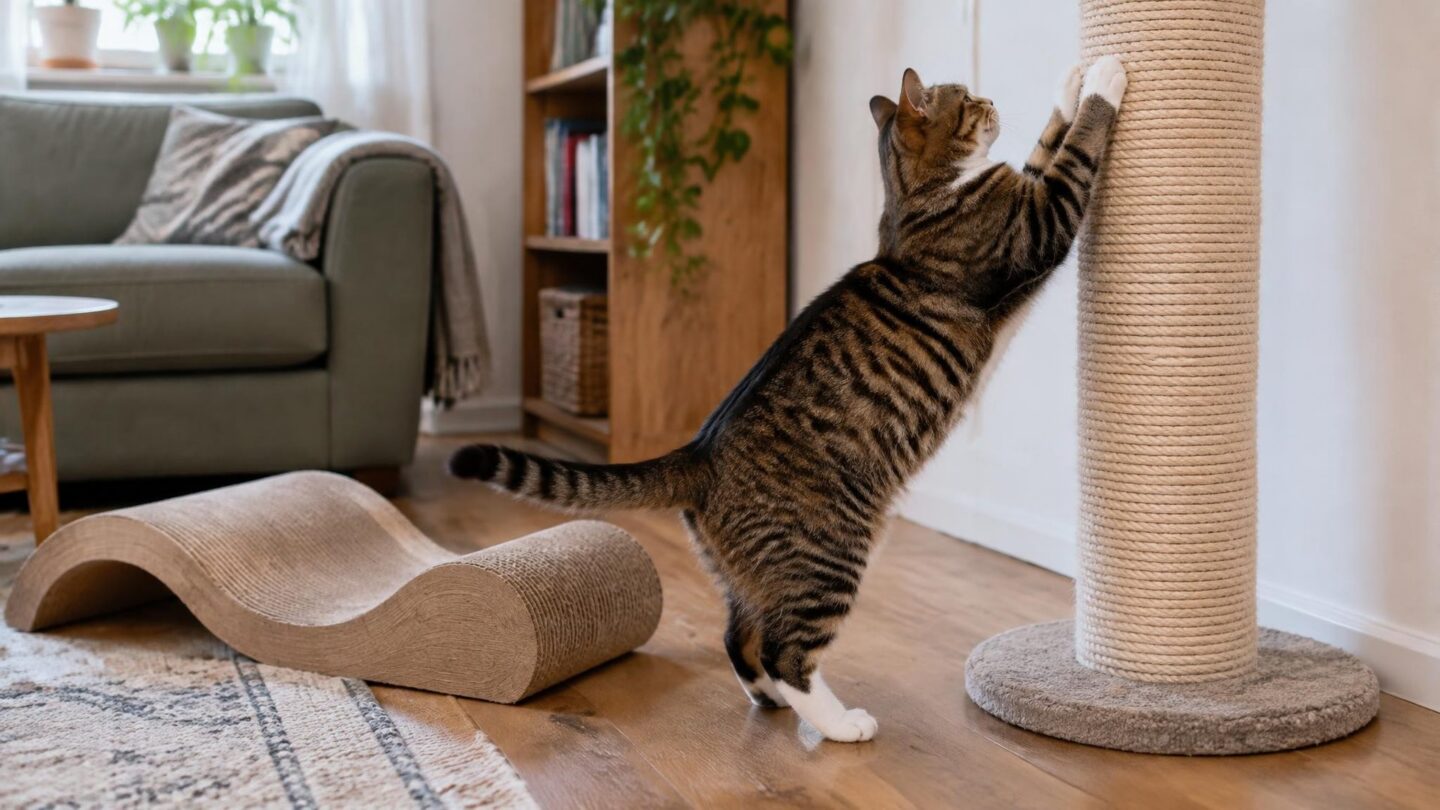
Watch where the damage is. A cat that scratches the side of the couch or a doorframe is a vertical scratcher, so give it sisal. A cat that scratches rugs or the carpet at the base of furniture is a horizontal scratcher, so give it cardboard. Many cats do both, and one of each greatly improves the odds your furniture is left alone.
Skip carpet-covered scratchers as the main surface. They teach a cat that carpet is fair game.
The best of each
Best sisal post
SmartCat Ultimate Scratching Post
The benchmark vertical scratcher. At 32 inches it is tall enough for a full stretch, and the base is stable enough that it does not tip.
- Height 32 in
- Base 16 × 16 in
What we like
- 32-inch height allows a full-body stretch for most cats
- Stable 16 × 16 in base
- Woven sisal fabric, which lasts longer than rope
What to know
- Takes up floor space
- No perch or play features
- The sisal fabric will need replacing eventually, usually after 1 to 2 years
Best for: Cats that scratch couch arms, doorframes and other upright surfaces.
Read the full write-up
Place it right next to the spot your cat already scratches. Once the habit has moved to the post, shift it gradually over two to four weeks to where you would prefer it.
Best budget sisal post
Amazon Basics Sisal Cat Scratching Post
A budget post with tightly wound sisal rope. At 25.6 inches it is shorter than ideal for large cats, but it works for smaller cats or as a second scratcher.
- Height 25.6 in
What we like
- Very affordable
- Tightly wound sisal rope
- Good for covering several rooms
What to know
- 25.6 inches is short for a large cat
- Less stable than heavier posts
- Rope can unravel at the ends with heavy use
Best for: Smaller cats, or extra posts around the home.
Read the full write-up
If your cat scratches hard, weigh the base down. For a large cat, the taller post above is the better buy.
Best cardboard scratcher
PetFusion Ultimate Cat Scratcher Lounge
A curved corrugated cardboard lounge that works as a scratcher and a place to nap. Cats spend more time near it, which makes them more likely to scratch it.
- Length 34 in
What we like
- Large curved surface for scratching and lounging
- Looks good enough for a living room
- Replacement inserts extend its life
- Most cats accept it readily
What to know
- Sheds cardboard dust and debris
- Inserts need replacing every 2 to 4 months for active scratchers
- Can slide on smooth floors
Best for: Cats that scratch rugs or carpet, and cats that like to lounge where they scratch.
Read the full write-up
At 34 inches long it lets most cats stretch out fully while they scratch. For a cat that is destroying rugs, this is the first thing we would try.
Best premium cardboard scratcher
Hepper Hi-Lo Cat Scratcher
A premium cardboard scratcher on an aluminum frame that adjusts between three positions: low and flat, angled, and a tall lounge.
What we like
- Three height positions
- Designed like furniture
- Aluminum frame lasts for years
- Replaceable cardboard inserts
What to know
- High price
- Cardboard debris with heavy scratching
- Heavy to move
Best for: People who want a scratcher that looks like part of the room.
Read the full write-up
Because the cardboard inserts are replaceable and the frame is built to last, this is a long-term purchase, not a disposable one.
Getting your cat to use it
- Put the scratcher where your cat already scratches, not where it suits you.
- Rub in or sprinkle dried catnip, and reward your cat when it uses the scratcher.
- Put double-sided tape on the furniture for a while so it is less appealing.
- Have a scratcher in each area your cat spends time in.
- Never punish scratching. Redirect it.
See the full list in our guide to the best cat scratchers.
Questions
Do cats prefer sisal or cardboard?
It depends on how they scratch. Sisal is generally preferred for vertical posts and cardboard for horizontal scratchers, and many cats use both. If your cat ignores the scratcher you have, try the other material before you give up.
How long do cardboard cat scratchers last?
About two to four months for an active scratcher. Loungers with replaceable inserts last much longer overall, because you swap the cardboard and keep the frame. Sisal fabric posts last one to two years, and rope posts six to eighteen months.
Are cardboard scratchers messy?
Yes, a little. Corrugated cardboard sheds dust and small pieces as it wears, so expect to sweep around it. Many owners accept that because cardboard is cheap to replace and so many cats like it.
Should I buy a carpet scratcher?
We would not use carpet as the main scratching surface. It teaches a cat that carpet is acceptable to scratch, which is the opposite of what you want if you have carpet or rugs at home.

House Cat Living publishes practical indoor cat care guides, home setup advice, and product decision help for cat owners. Meet the team