
Why Is My Cat Not Eating? 7 Causes and What to Do
A cat that suddenly stops eating almost always signals something has changed, from stress to illness. Learn the seven most common causes, what to try at home, and when 24 hours without food means it's time to call the vet.
House Cat Living earns a commission when you buy through links on this page, at no extra cost to you. How that works
On this page
How long can a cat safely go without eating? Common reasons your cat stops eating What you can try at home When to call your vet Frequently Asked Questions The bottom lineThere are few things more unsettling than putting down your cat’s food and watching them walk away from it. Cats are creatures of habit, so a sudden loss of appetite almost always means something has changed. If you are asking why is my cat not eating, the good news is that many causes are minor and fixable at home. The important part is knowing which ones are not, and how long you can safely wait before calling your vet. Below are the seven most common reasons, what to try, and the warning signs that mean it is time for help.
The short answer
Cats stop eating for reasons that range from stress and dental pain to nausea or a hidden illness. A healthy adult cat should not go more than about 24 hours without food, so any cat refusing to eat for a full day, or showing other symptoms like vomiting or lethargy, needs to see a vet promptly.
How long can a cat safely go without eating?
This is the part to take seriously. When a cat stops eating, its body starts breaking down fat for energy, and in cats that process can overwhelm the liver and lead to a dangerous condition called hepatic lipidosis, or fatty liver disease. It can develop in just a couple of days, and overweight cats are at higher risk.
As a rough guide, a single missed meal or one off day is usually nothing to panic over. Going 24 hours with no food at all warrants a call to your vet, and 48 hours or more is urgent. Kittens, senior cats, and cats with existing health conditions have far less margin, so do not wait as long with them.
Common reasons your cat stops eating
Appetite loss is a symptom, not a diagnosis, so the goal is to work out what changed. These are the causes we see most often, roughly in the order worth checking.
1. Stress or a change in routine
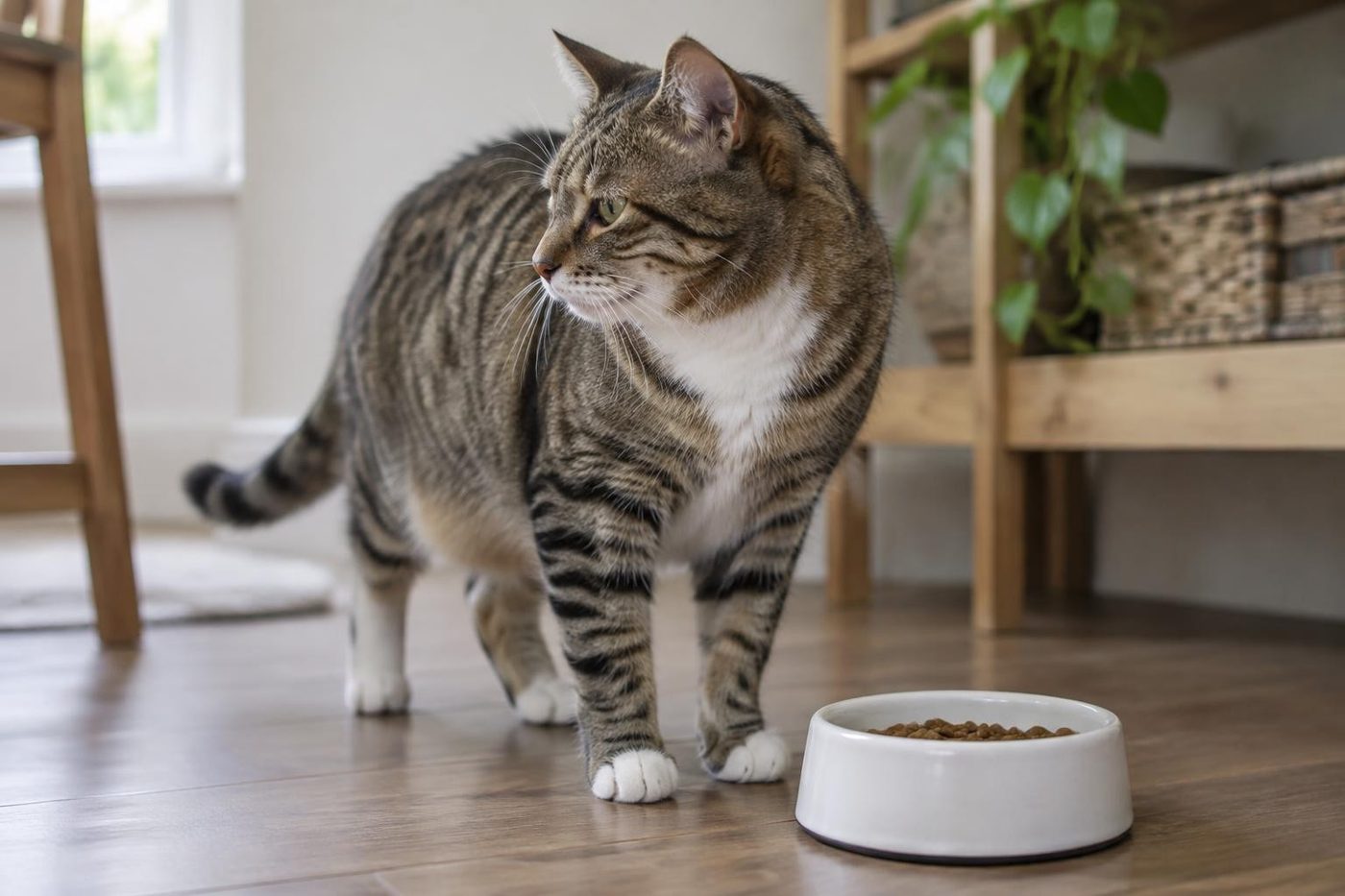
Cats are sensitive to change in ways that surprise many owners. A new pet, a houseguest, a move, rearranged furniture, or even a relocated food bowl can be enough to put a cat off its food. Stress-related appetite loss usually settles once the cat feels secure again, often within a day or two.
2. Dental pain or mouth problems
If eating hurts, your cat will avoid it. Dental disease, a broken tooth, mouth ulcers, or inflamed gums are common and easy to miss. Watch for a cat that comes to the bowl hungry, then backs away, drops food, chews on one side, or paws at its mouth.
3. Illness or an underlying condition
Loss of appetite is one of the first signs of many feline illnesses, from infections and kidney disease to digestive trouble. This is the category that makes appetite loss worth respecting. If your cat is not eating and also seems off in any other way, an underlying problem is the likely reason, and a vet visit is the answer.
4. Nausea or a reaction to medication
A nauseated cat turns away from food the same way we do. Hairballs, an upset stomach, or a recent medication can all cause short-term nausea. If your cat started a new medication and then stopped eating, mention it to your vet, since the two may be connected.
5. Something about the food or the bowl
Cats can be remarkably particular. A new flavor or brand, food that has gone stale or sat out too long, a bowl washed with strong-smelling soap, or a dish placed next to the litter box can all be enough. Many cats also dislike deep bowls that press against their whiskers while they eat.
6. A recent vaccine or vet visit
It is common for cats to eat less for a day after vaccinations or a stressful trip to the vet. Mild, short-lived appetite loss in the day or so following a visit is usually nothing to worry about. If it lasts longer than that, treat it like any other case and call.
7. Plain fussiness or boredom
Some cats get bored of the same food served the same way every day, or hold out for something they like better. This is real, but it is the explanation to reach for last, only after you have ruled out pain and illness. A genuinely fussy cat is still bright, active, and otherwise themselves.
What you can try at home
If your cat is otherwise acting normal and has been off its food for less than a day, these gentle steps often help. Skip them and call your vet instead if any of the warning signs further down are present.
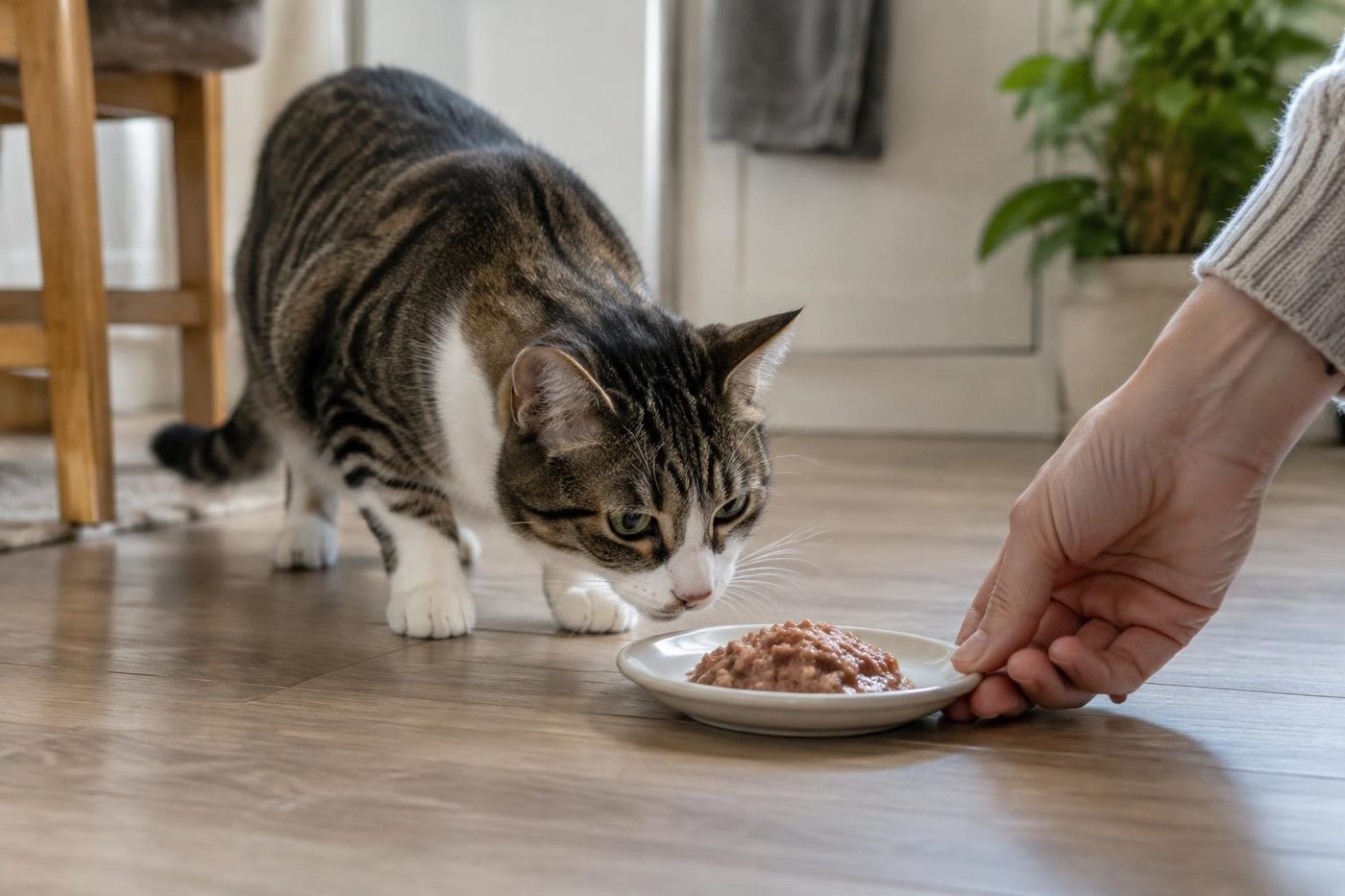
- Warm the food slightly. A few seconds of warming releases the aroma, and smell drives a cat’s appetite far more than taste does.
- Offer a strong-smelling wet food or a tempting topper. Many reluctant eaters will perk up for something fragrant, like a fish-based wet food or a tasty wet food topper. Mixing a little into their usual food is often enough to restart them.
- Serve fresh food in a clean, shallow dish. Tip out anything stale, wash the bowl with mild soap, and use a wide dish that does not crowd the whiskers.
- Move the bowl somewhere calm, away from the litter box, busy doorways, and other pets, so your cat can eat without feeling on guard.
- Try a little gentle encouragement. Offering food from your fingers or simply sitting nearby can reassure an anxious cat. Never force-feed.
- Reduce stressors where you can. If something changed recently, give your cat a quiet space and a little time to adjust.
When to call your vet
Appetite loss on its own is worth watching. Appetite loss alongside any of these signs means it is time to stop trying home fixes and get your cat seen.
- No food at all for 24 hours, or much less for a kitten, senior, or cat with a health condition.
- Vomiting, diarrhea, or repeated retching.
- Lethargy, hiding, or a clear drop in energy.
- Noticeable weight loss, or suddenly being able to feel more bone.
- Yellowing of the gums, eyes, or skin, which can signal liver trouble.
- Difficulty eating, drooling, or pawing at the mouth.
- Drinking much more, or much less, than usual.
When in doubt, call. Vets would always rather hear from you early than treat a problem that has had days to take hold.
This article is for general informational purposes only and is not a substitute for professional veterinary advice. Always consult your veterinarian about your cat’s health.
Frequently Asked Questions
How long can a cat go without eating before it is dangerous?
A healthy adult cat should not go beyond about 24 hours without food. After 48 hours the risk of liver complications rises sharply. Kittens, seniors, and unwell cats have far less leeway, so contact your vet much sooner if they refuse to eat.
Will a cat starve itself?
Cats do not deliberately starve themselves out of stubbornness, despite the myth. A cat that keeps refusing food even when offered tempting options is almost always telling you something is wrong, whether that is pain, nausea, or illness, and should be checked.
My cat is not eating but is drinking water. Is that okay?
It is mildly reassuring that your cat is still drinking, but it does not rule out a problem. Continued refusal of food still needs attention within 24 hours. Keep a close eye on your cat and call your vet if it continues or other symptoms appear.
How can I get my sick cat to eat?
For a cat that is unwell, follow your vet’s guidance first. Warmed, strong-smelling wet food, gentle hand-feeding, and a calm environment can all help tempt them. Never withhold food to force a fast, and never give human medications to try to boost appetite.
The bottom line
A cat turning away from food is worrying, but it is also one of the clearest signals your cat can give you, and most causes are manageable once you spot them. Start by checking for stress, food problems, and signs of pain, try a few gentle tricks at home, and keep an eye on the clock. If the refusal passes 24 hours or comes with any other symptom, trust your instincts and call your vet. You know your cat best.

House Cat Living publishes practical indoor cat care guides, home setup advice, and product decision help for cat owners. Meet the team