Ceramic vs Stainless Steel vs Plastic Cat Fountains: Which Material Is Best?
Ceramic, stainless steel, or plastic? A cat fountain's material shapes everything from bacteria buildup to chin acne. Here's how the three compare—and which one we'd actually buy for your cat.
House Cat Living earns a commission when you buy through links on this page, at no extra cost to you. How that works
On this page
Cat Fountain Materials at a Glance Why Fountain Material Matters More Than You Think Stainless Steel Cat Fountains: The Practical Winner Ceramic Cat Fountains: Heavy, Hygienic, and Handsome Plastic Cat Fountains: Cheap and Clever, With a Catch How to Choose the Right Cat Fountain Material for Your Cat Frequently Asked Questions The VerdictPick up any two cat fountains and the biggest difference between them usually isn’t the pump, the filter, or the price. It’s the cat fountain material. Ceramic, stainless steel, and plastic each behave very differently once a cat has been drinking (and drooling, and shedding) into them for a few months.
We’ve compared all three materials in depth — including the slime problem and the chin-acne risk that comes with one of them. Here’s how they actually compare, and which fountains we’d buy in each material.
The short answer
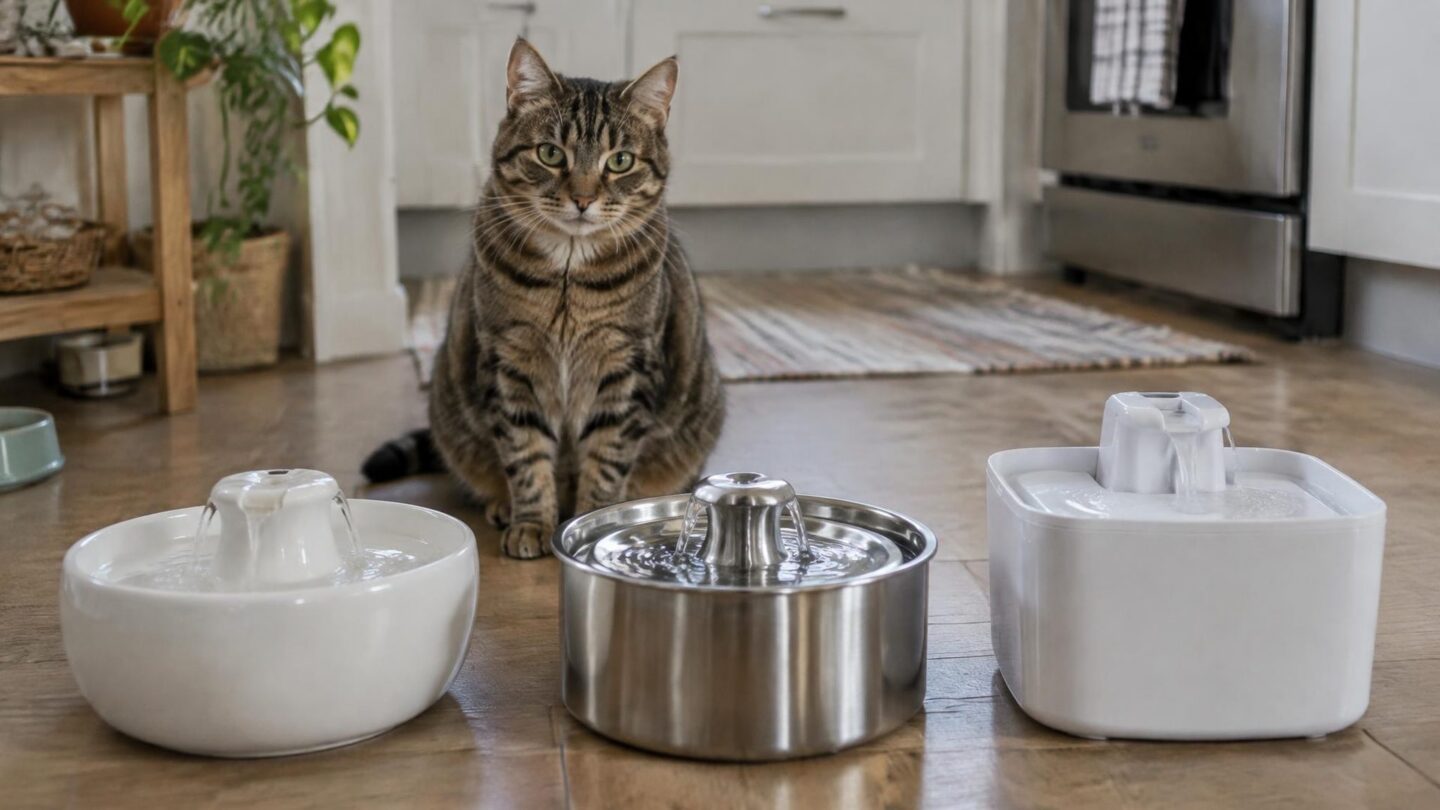
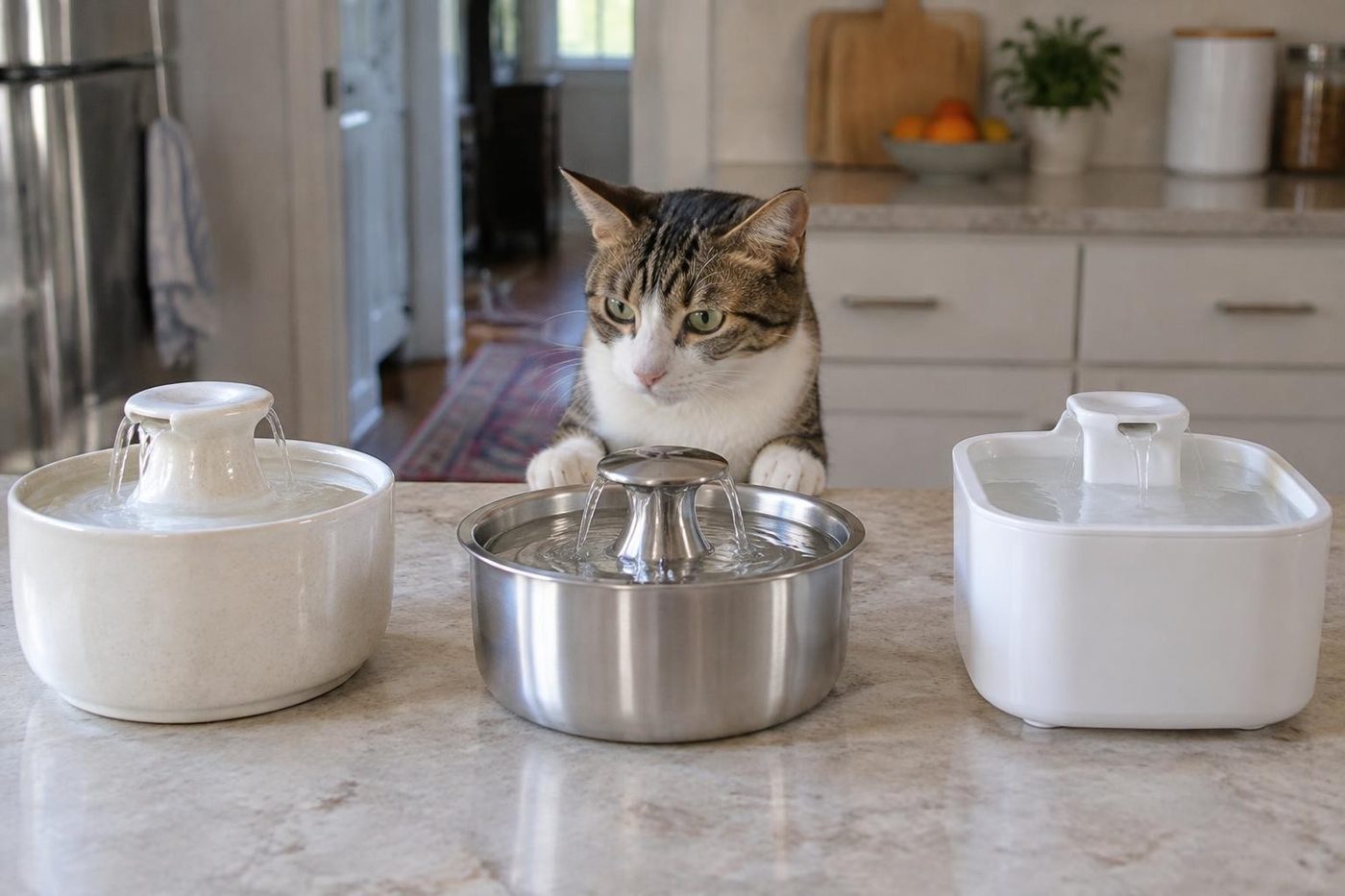
Stainless steel is the best all-around cat fountain material. It resists bacteria, survives drops, goes in the dishwasher, and won’t trigger chin acne. Ceramic is a close second and the better pick for cats who shove their bowls around. Plastic wins only on price and design variety, and it demands the most cleaning.
Cat Fountain Materials at a Glance
| Factor | Stainless Steel | Ceramic | Plastic |
|---|---|---|---|
| Hygiene | Excellent (non-porous) | Excellent if glaze intact | Fair (scratches harbor bacteria) |
| Chin acne risk | Very low | Very low | Highest of the three |
| Durability | Excellent, dent-proof in practice | Good, but can chip or crack | Good, but scratches and clouds |
| Weight / tip resistance | Light, can slide | Heavy, stays put | Light, easy to shove |
| Dishwasher safe | Usually yes | Usually yes | Sometimes, check the label |
| Typical price | $$ to $$$ | $$ to $$$ | $ to $$ |
| Best for | Most cats, acne-prone cats | Bowl-shovers, style-conscious homes | Tight budgets, feature seekers |
Why Fountain Material Matters More Than You Think
A fountain isn’t a water bowl you rinse daily. It runs 24/7, holds one to three liters at a time, and mixes warm pump motors with cat saliva, food particles, and airborne dust. That’s a friendly environment for biofilm, the slippery pink or clear slime you feel when you clean the basin.
How fast that biofilm forms, and how completely you can remove it, comes down to the surface your cat drinks from. Non-porous materials like stainless steel and glazed ceramic give bacteria very little to grip. Plastic starts smooth but develops micro-scratches from cleaning and cat tongues, and those scratches are exactly where bacteria settle in.
The chin acne connection
Feline chin acne shows up as blackheads, crusty bumps, or a “dirty chin” that doesn’t wipe clean. Plastic bowls and fountains are one of the most commonly cited triggers, because scratched plastic holds bacteria right where your cat’s chin rests while drinking.
Many owners see chin acne improve within a few weeks of switching to stainless steel or ceramic. If your cat’s chin looks irritated, swollen, or is losing fur, have your vet take a look before assuming the bowl is the whole story, since infections and other skin conditions can look similar.
This article is for general informational purposes only and is not a substitute for professional veterinary advice. Always consult your veterinarian about your cat’s health.
Stainless Steel Cat Fountains: The Practical Winner
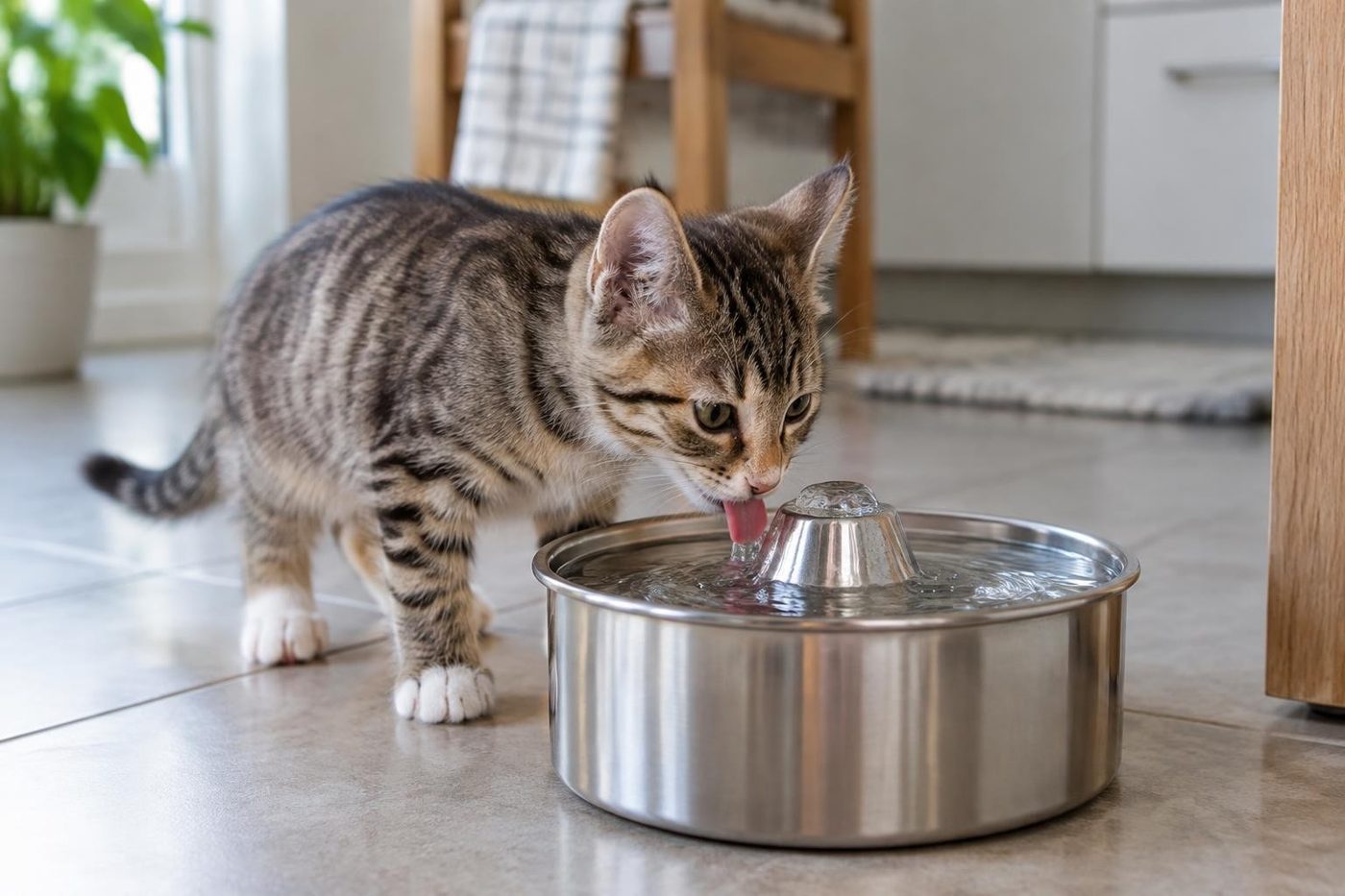
Stainless steel is what your vet’s clinic uses for a reason. Food-grade steel (look for 304 or 18/8 on the listing) is non-porous, doesn’t scratch in any way that matters, and shrugs off years of dishwasher cycles. Of the three materials, it’s the one you can be laziest with and still keep hygienic.
It’s not perfect. Steel fountains are light for their size, so an enthusiastic pawer can slide one across the floor, and glossy steel shows water spots and smudges faster than the other two materials. Some also arrive with plastic internals, so check whether the water actually touches steel or just sits in a steel-look shell.
Pros
- Most bacteria-resistant surface of the three.
- Dishwasher safe and nearly indestructible.
- Best choice for cats with chin acne.
- No flavor or odor transfer to the water.
Cons
- Lightweight, so determined cats can slide it.
- Shows smudges and hard-water spots quickly.
- Some models hide plastic parts under a steel top.
Our stainless steel picks
Best overall: the Pioneer Pet Raindrop Stainless Steel Fountain (60 oz). Two pieces of steel, one quiet pump, and a bubbling chute cats genuinely like. It disassembles in seconds, goes in the dishwasher, and the pumps routinely last years. The 60 oz capacity suits one or two cats; bigger households should refill daily or size up.
Best for multiple cats: the PetSafe Drinkwell 360 Stainless Steel Fountain. Up to five adjustable streams around a 360-degree design means timid cats never have to share a drinking spot with the household bully. It holds a full gallon, so refills are an every-few-days chore instead of a daily one.
Ceramic Cat Fountains: Heavy, Hygienic, and Handsome
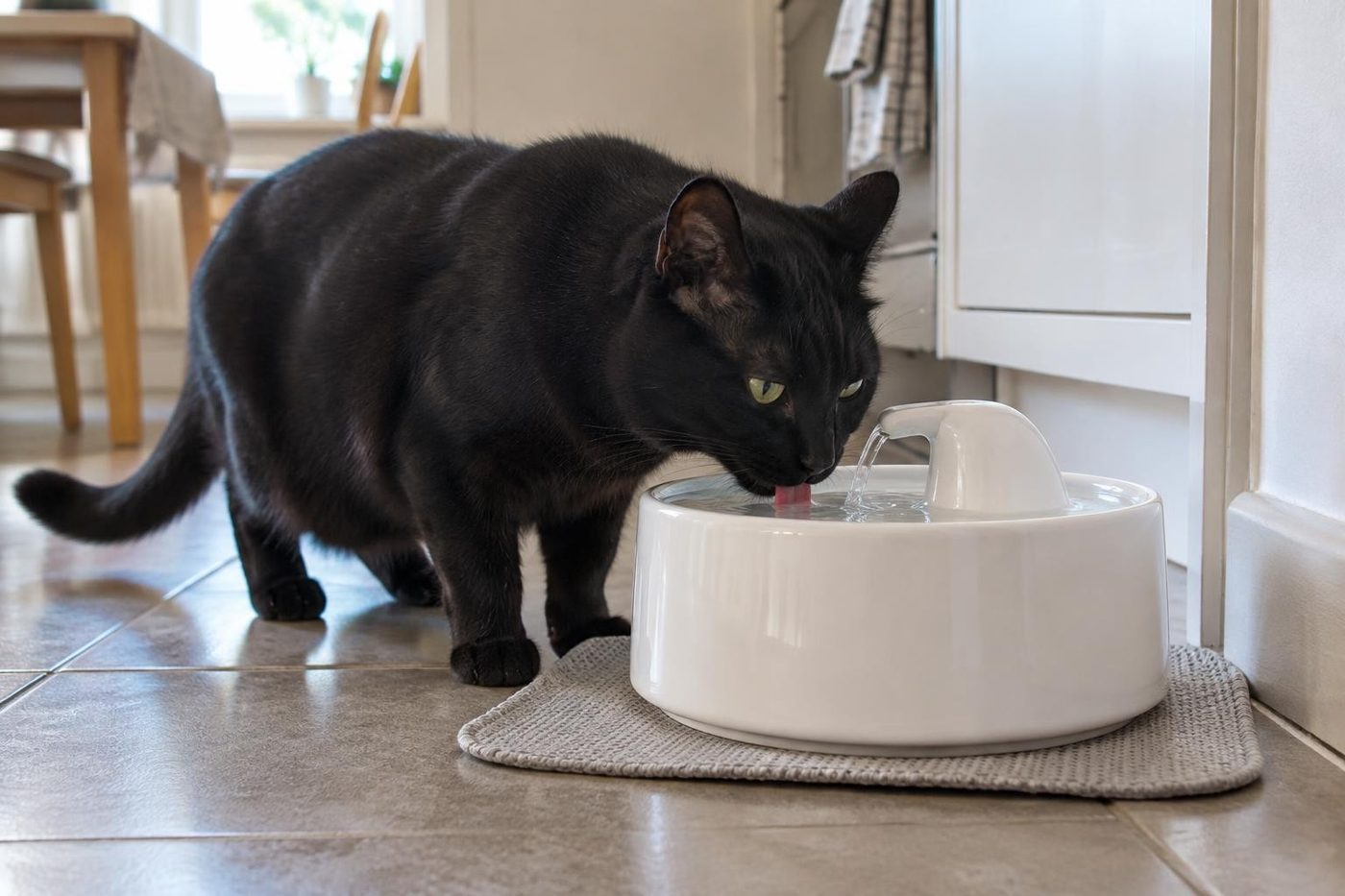
Glazed ceramic matches stainless steel on hygiene. The fired glaze is non-porous, easy to sanitize, and kind to sensitive chins. Where ceramic pulls ahead is mass: a ceramic fountain often weighs five or six pounds empty, which turns “cat hockey” into a non-event. If your cat treats lightweight bowls as toys, ceramic ends the game.
The tradeoffs follow directly from that weight. Ceramic is awkward to carry to the sink full (use a jug to refill in place), and a drop onto tile can crack or chip it. A chipped glaze exposes porous clay underneath, and at that point the hygiene advantage is gone, so a chipped ceramic fountain should be retired.
Pros
- Non-porous glaze is as hygienic as steel.
- Heavy enough to stop sliding and tipping.
- Best-looking option in most homes.
- Safe for acne-prone chins.
Cons
- Heavy to move, refill, and clean.
- Can chip or crack if dropped.
- Chipped glaze must be replaced, not ignored.
Our ceramic picks
Best overall ceramic: the iPettie Tritone Ceramic Fountain (2.1 L). Three drinking levels give cats a choice of falling water or a calm pool, the dual foam-plus-carbon filtration keeps hair out of the pump, and the whole thing is heavy enough that even a determined paw can’t budge it. It’s the ceramic fountain we’d hand to a first-timer.
Best for shy cats: the PetSafe Ceramic Pet Fountain (60 oz). Its low, gentle flow barely makes a sound, which suits timid or noise-averse cats that a splashy fountain would scare off. The simple two-piece basin is quick to scrub, and the neutral glazed look disappears into most kitchens.
Plastic Cat Fountains: Cheap and Clever, With a Catch
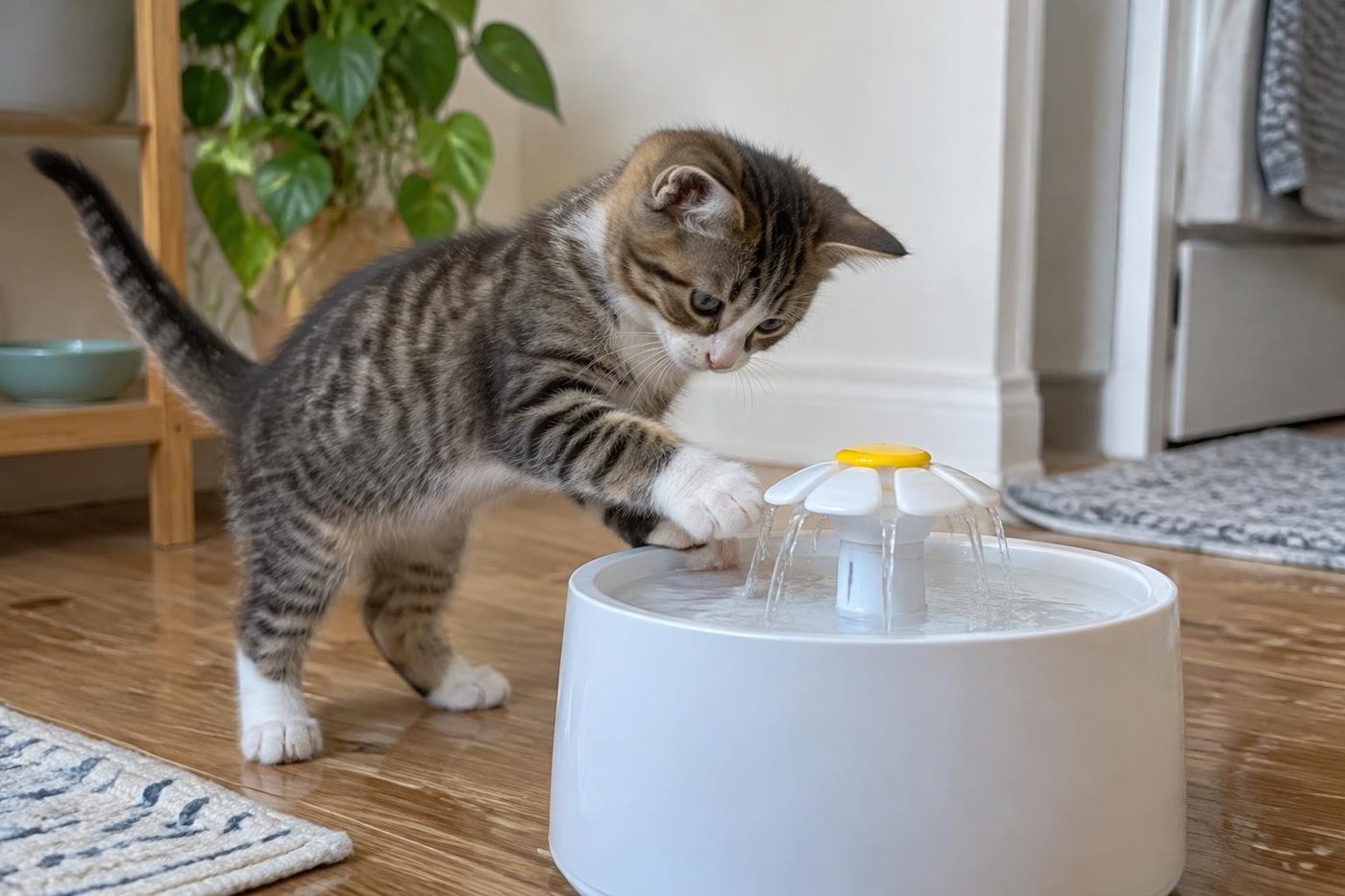
Plastic gets a rough reputation, and some of it is earned. But it’s also where the innovation lives. Cordless pumps, smart sensors, huge capacities, and playful designs like flower spouts almost always debut in plastic because it’s cheap to mold. A BPA-free plastic fountain from a reputable brand is a perfectly reasonable purchase, especially on a budget.
The catch is maintenance discipline. Plastic scratches, and scratched plastic hangs onto bacteria and biofilm no matter how hard you scrub. Plan on cleaning a plastic fountain more often than you would steel or ceramic, using a soft sponge rather than an abrasive pad, and replacing the whole unit once the basin looks cloudy or feels rough. And if your cat has ever had chin acne, skip plastic entirely.
Pros
- Lowest prices of any material.
- Most designs, features, and capacities.
- Light and easy to carry to the sink.
- Won’t chip or shatter if dropped.
Cons
- Scratches harbor bacteria over time.
- Highest chin acne risk of the three.
- Needs more frequent cleaning.
- Effectively a consumable; plan to replace it.
Our plastic picks
Best budget fountain: the Catit Flower Fountain (3 L / 100 oz). The adjustable flower spout does gentle bubbles, calm streams, or free-falling water, and its big capacity means fewer refills. It’s BPA-free, quiet, and the single most cat-approved budget fountain we know. Just commit to a proper cleaning schedule.
Best hybrid: the PetLibro Dockstream Cordless Fountain (2.5 L). Technically a plastic body, but the water tray your cat actually drinks from is stainless steel, which neatly splits the difference: plastic pricing and cordless convenience, steel where the chin touches. Its 23-decibel pump is about as close to silent as fountains get.
How to Choose the Right Cat Fountain Material for Your Cat
- Cat has (or had) chin acne: stainless steel or ceramic only. No plastic, including plastic drinking trays.
- Cat shoves bowls around: ceramic. Six pounds of fired clay beats any rubber foot.
- You want minimum effort: stainless steel. Fewest cleanings, dishwasher friendly, lasts basically forever.
- Tight budget or first fountain: BPA-free plastic from a known brand, cleaned weekly and replaced when scratched.
- Multiple cats: capacity and drinking positions matter more than material. A gallon-size steel 360 design covers both.
Whatever material you land on, the routine is the same: top off daily, deep clean every one to two weeks, swap the filter every two to four weeks, and clean the pump monthly. A neglected steel fountain grows slime just as happily as a plastic one; steel just gives you more margin for error.
Frequently Asked Questions
Which cat fountain material is the most hygienic?
Stainless steel and glazed ceramic are effectively tied. Both are non-porous, so bacteria and biofilm can’t embed in the surface, and both sanitize completely in a dishwasher. Plastic is the least hygienic because everyday scratches create microscopic grooves that trap bacteria even after scrubbing.
Do plastic cat fountains really cause chin acne?
Plastic is the most commonly cited environmental trigger for feline chin acne, because bacteria in scratched plastic sit right against the chin while drinking. Not every cat reacts, but many owners see acne clear up within a few weeks of switching to steel or ceramic. Persistent or severe acne warrants a vet visit.
Are ceramic cat fountains dishwasher safe?
Most glazed ceramic basins are dishwasher safe, but always confirm on the specific product listing. The pump is never dishwasher safe on any fountain; remove it and hand wash. Inspect ceramic pieces for chips after each wash, since a chipped glaze exposes porous clay and should be replaced.
How often should I replace a plastic cat fountain?
Replace a plastic fountain when the basin looks cloudy, feels rough, or shows visible scratches, typically every one to two years with regular use. Steel and ceramic fountains don’t have this expiration date; with pump maintenance they can run for many years, which offsets their higher upfront cost.
What is the best cat fountain material overall?
For most homes, stainless steel is the best cat fountain material: maximum hygiene, minimum effort, no acne risk, and near-indestructible durability. Choose ceramic if your cat bullies lightweight bowls or you care about looks, and choose quality BPA-free plastic only when budget is the deciding factor.
The Verdict
Stainless steel wins on the things that matter daily: hygiene, cleaning effort, and durability. Our top pick overall is the Pioneer Pet Raindrop. If your cat is a bowl-shover or you want something prettier on the floor, the iPettie Tritone Ceramic is every bit as hygienic. And if the budget says plastic, the Catit Flower Fountain plus a weekly scrub will keep your cat drinking happily. Your cat won’t read the spec sheet; they’ll just drink more from a fountain that’s clean, quiet, and fresh, and that’s the whole point.

House Cat Living publishes practical indoor cat care guides, home setup advice, and product decision help for cat owners. Meet the team